

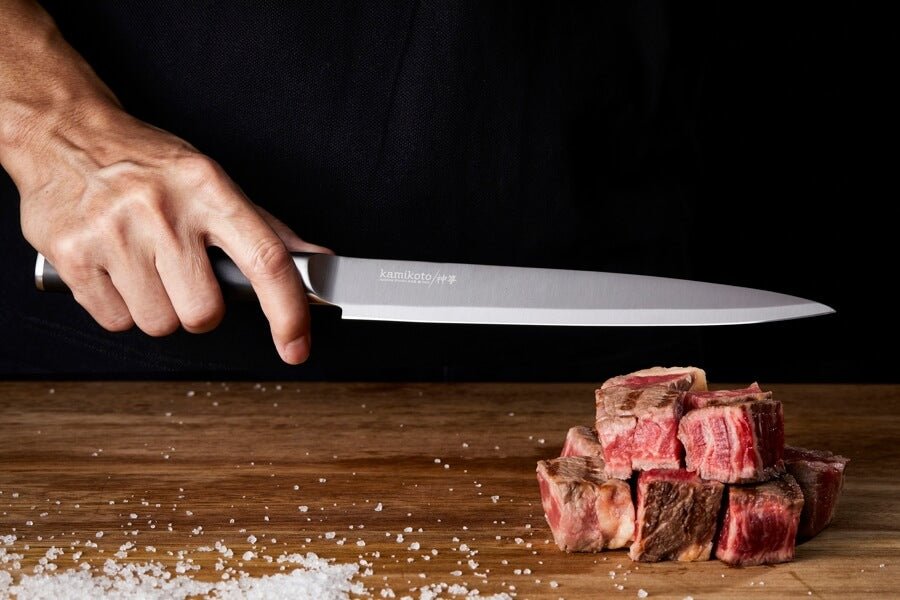

Knives are not just cutlery; they are our extensions, connecting precision, creativity, and functionality. From culinary skills to outdoor survival skills, this simple knife has come a long way in becoming a multifaceted cutlery with numerous uses. Learning about the multifaceted roles of this cutlery helps in appreciating its craftsmanship, functionality, and versatility. We are going to explore five different aspects of this multifaceted blade in this section.
Culinary Precision: The Heart of the Kitchen
Knives are essential tools that cannot be ignored in culinary settings. In a kitchen, whether professional or domestic, cutters are essential tools that require sharpness, balance, and comfort. A well-maintained chef’s knife enables users to make clean slices, dice, and chop food items with ease. In addition to their utility, blades have also been a symbol of artistry in a kitchen setting. Some knives are made with unique designs and patterns that make them collector’s items. To use one effectively, one has to consider various options available, including paring knives, boning knives, Santoku knives, etc. Investing time in learning about blades made from high-carbon steel vs. stainless steel will make the experience seamless.
Craftsmanship and DIY: Beyond Food Preparation
Blades have a life beyond their use as a cutting tool in a kitchen. They have a use as a tool in a workshop. In woodworking, leatherwork, and model-making, knives are essential tools. They are needed for detailed work that requires a lot of carving. A sharp utility knife will cut through a material cleanly without fraying. In addition, a specialized cutter will allow one to make intricate patterns with ease. The use of a well-balanced blade will give one a sense of satisfaction as they craft their work. This use of a tool as a medium for creativity shows that a knife’s use is not limited to cutting but extends to creating fine work.
Outdoor Adventures: A Companion in the Wild
Knives are indispensable tools for use in the outdoors, where reliability and versatility are key factors to consider. Blades are useful for camping, hiking, or even fishing, as they can be used to prepare food, build shelters, or respond to emergencies. Traversing through rough terrain can call for clearing brushwood, cutting ropes, or even starting kindling for a fire, which requires sharpness and reliability. For adventurers, it’s wise to invest in a durable folding knife that combines portability with practical functionality, ensuring readiness without encumbrance. Cutters used for outdoor activities are usually constructed with strong materials that are resistant to corrosion, with an ergonomic grip for easy handling in unpredictable conditions.
Everyday Carry: Safety, Utility, and Readiness
Moving beyond the use for professional and outdoor activities, cutters have found their way into daily life as well. Many people use an automatic blade as part of their daily carry and appreciate the practicality it offers for daily activities. The safety aspect of the knife is extremely important and has been implemented through various designs, including locks and grips, which allow the cutter to be used for daily activities without compromising safety. It is important to be familiar with the legal status of knives in your area. A good everyday carry combines functionality with discretion and represents the personality and practicality of the owner. The use of blades as part of daily activities has proven to be efficient and safe.
Collecting and Appreciating: The Art of Blades
Knives are also a source of fascination for collectors. In addition to their use, high-quality cutters are also appreciated for their craftsmanship, historical value, and aesthetic appeal. Collectors look for limited editions, handmade knives, or designs from famous manufacturers. Analyzing various methods of forging, materials for handles, and shapes of blades can provide information about cultural heritage and technological advancements. Careful consideration is required for the display and maintenance of a collection. This appreciation can transform a knife from a simple utility item to a representation of craftsmanship, proving that even a simple cutter has stories of human innovation and creativity.
Knives play an incredibly versatile role. Their functionality touches upon art, safety, and readiness, highlighting practicality and elegance. Learning about these aspects will help one appreciate the design, usability, and history of the cutter. Whether used by a chef, an artist, or an adventurer, blades represent a blend of precision and robustness, proving that even a simple tool can have a great influence on our lives, covering a range of aspects within our modern world.