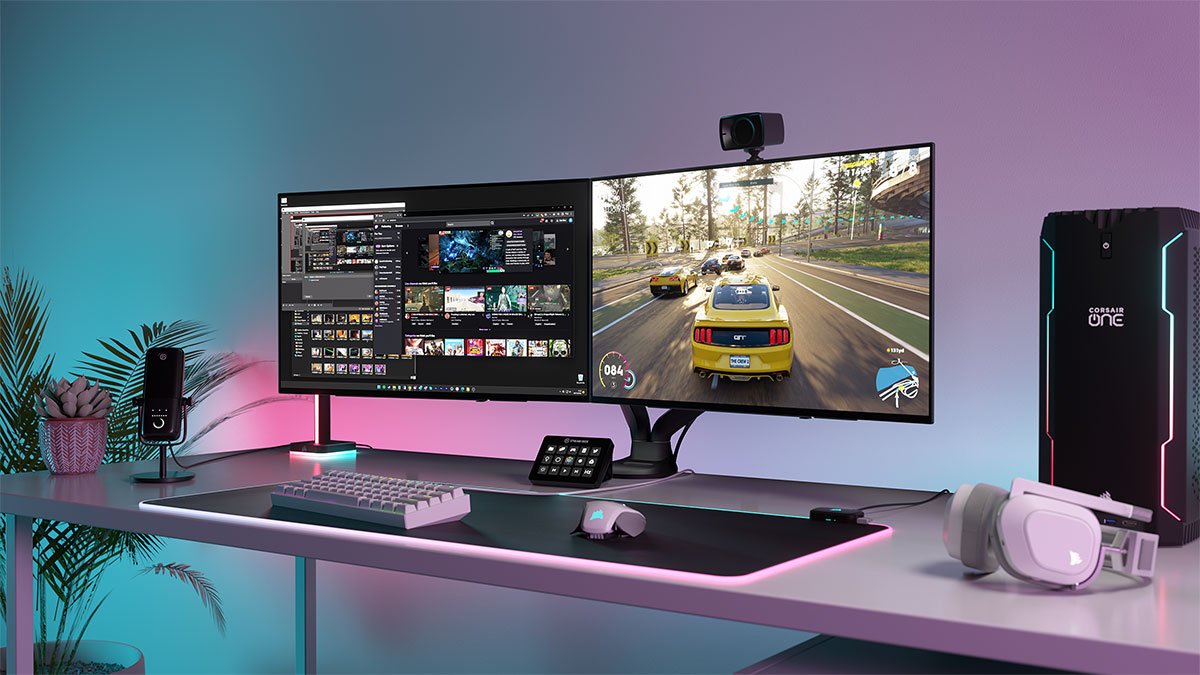
The boundary between “work” and “play” in the digital world has never been thinner. For years, remote access technology was a dry, corporate affair—useful for spreadsheets and database management, but woefully inadequate for anything requiring high-speed graphical rendering. However, the architecture of the modern internet has undergone a seismic shift. Today, the same infrastructure that allows a financial analyst to process data from a home office is being leveraged by enthusiasts for high-fidelity interactive entertainment.
As an SEO strategist with 15 years of experience tracking the pulse of digital transformation, I’ve observed that the gold standard for connectivity is no longer just “reliability”—it is “real-time performance.” This is why a single platform can now dominate two seemingly different worlds: professional productivity and game streaming.
The High-Performance Hybrid: Why Gamers and Pros Need the Same Tech
It may seem counterintuitive to put a corporate attorney and a competitive gamer in the same technological bucket. However, their technical requirements are nearly identical. Both require:
- Ultra-Low Latency: For a gamer, a 100ms delay is the difference between winning and losing. For a video editor, that same delay makes precision cutting impossible.
- High Bitrate Clarity: Compression artifacts can obscure fine text in a CAD drawing or hide an opponent in the shadows of a 4K game environment.
- Consistent Frame Rates: Stuttering is the enemy of immersion and efficiency alike.
By utilizing the StarDesk remote desktop protocol, users are tapping into a pipeline designed to handle massive amounts of visual data with minimal overhead. This convergence means that a workstation designed for 10 hours of heavy-duty software engineering during the day can instantly transform into a high-end gaming rig in the evening, accessible from any device.
The Infrastructure of the “Cloud PC”
The concept of the “Cloud PC” has evolved from a niche hobbyist project into a viable enterprise and consumer solution. Instead of tethering a user to a specific physical box under a desk, the computer exists as a powerful resource in a data center or a secure office environment.
The magic happens in the encoding. Modern remote protocols use hardware-accelerated H.264 and H.265 encoding to “video stream” the desktop to a remote client. When this is done correctly, the user forgets they are looking at a stream. This is the ultimate goal of high-end remote access: transparency. You want the technology to disappear so only the task—or the game—remains.
Breaking the Hardware Cycle
One of the most significant advantages of this tech is the democratization of hardware. We are currently in an era where high-end GPUs are expensive and power-hungry. By using a robust remote solution, a user can access the power of a $3,000 workstation or gaming PC from a $300 Chromebook or an aging laptop.
This “thin client” approach extends the lifecycle of existing hardware, reduces electronic waste, and allows for a more mobile lifestyle. You are no longer limited by the processing power in your backpack; you are limited only by the quality of your connection.
Security in a World of Instant Access
As we push toward more open access, the “Security vs. Usability” debate intensifies. In the gaming world, security prevents account hijacking and data theft. In the professional world, it prevents catastrophic corporate espionage.
A professional-grade remote desktop solution addresses this through a layered defense:
- AES-256 Encryption: Ensuring that the stream cannot be intercepted or “sniffed” by third parties on public Wi-Fi.
- Peer-to-Peer Architecture: Whenever possible, modern tools establish a direct connection between the host and the client, bypassing middleman servers to reduce both latency and the surface area for attacks.
- Zero-Trust Implementation: Requiring constant verification, ensuring that just because a device is “known” doesn’t mean it is automatically trusted.
The Impact on Global Collaboration
From my perspective as a writer who has seen the transition from dial-up to fiber optics, the most exciting element of this technology is how it erases geography.
Imagine a studio where an animator in Seoul is working on the same high-resolution file as a director in Los Angeles. They aren’t sending files back and forth via slow cloud storage; they are both logging into the same high-powered environment. This “co-location of effort” through remote access is changing how creative industries function.
Similarly, in the gaming space, we are seeing the rise of “remote couch co-op,” where friends can play local multiplayer games together from different continents with the same responsiveness as if they were sitting on the same sofa. The tech that powers the boardroom is the same tech that powers the basement.
The Verdict: Efficiency Without Compromise
After 15 years of reviewing software, I’ve realized that the best tools are the ones that don’t force you to choose between power and portability. Whether you are building a global business empire or exploring a virtual one, the underlying requirement is a stable, high-speed gateway to your digital assets.
The shift toward remote-first environments is not a temporary trend; it is the new baseline. As internet speeds continue to climb and 5G becomes ubiquitous, the physical location of your computer will become irrelevant. What will matter is the software you use to reach it.
Your Next Step Toward Digital Freedom
If you are tired of being tethered to a single room or frustrated by the limitations of your mobile hardware, it is time to upgrade your connection strategy. You can transform any screen into a powerhouse by choosing a solution designed for the highest stakes—whether those stakes are a quarterly earnings report or a high-stakes digital tournament.